

Brand strategy with AI
Let’s talkAI can reinvent your brand every day. We establish what should remain recognisable — and put it into practice through your copy, design and the way your business works.
How many versions of a brand fit inside one company?
The owner generates a proposal, a salesperson prepares a presentation, marketing writes posts. Each describes the business differently, asks different questions and chooses what they like. Five people can produce five different visions of the same brand. All carrying the same logo.
Working on your own does not make the problem disappear. Each new conversation with an assistant that lacks an agreed brand context and principles can become another draw for a different version. Today, AI makes a convincing case for boldness and an uncompromising stance. Tomorrow, it proposes warmth and care. Both directions come with persuasive arguments, headlines and website ideas.
Now multiply those successive conversations by several people in the business. Differences between people compound differences between sessions. The pile of materials grows, while it becomes harder to say what the brand stands for or how a customer should recognise it.
It sounds good. But does it sound like you?
AI is adept at working with familiar patterns. Without a clear direction, it can easily give you more of what fills company websites already: a “personal approach”, “the highest quality”, a “passion for innovation”. Everything sounds right. Everything could be pasted onto a competitor’s website. A plausible, polished answer does not yet make a sound brand decision.
Brand strategy requires choices: what matters to us, what we promise and to whom, where we stand, and what we deliberately leave out. These decisions shape identity, communication and visual design. At Wizualni, we establish those principles and translate them into working practices for AI. Then successive pieces of copy, designs and tools can develop the same brand.
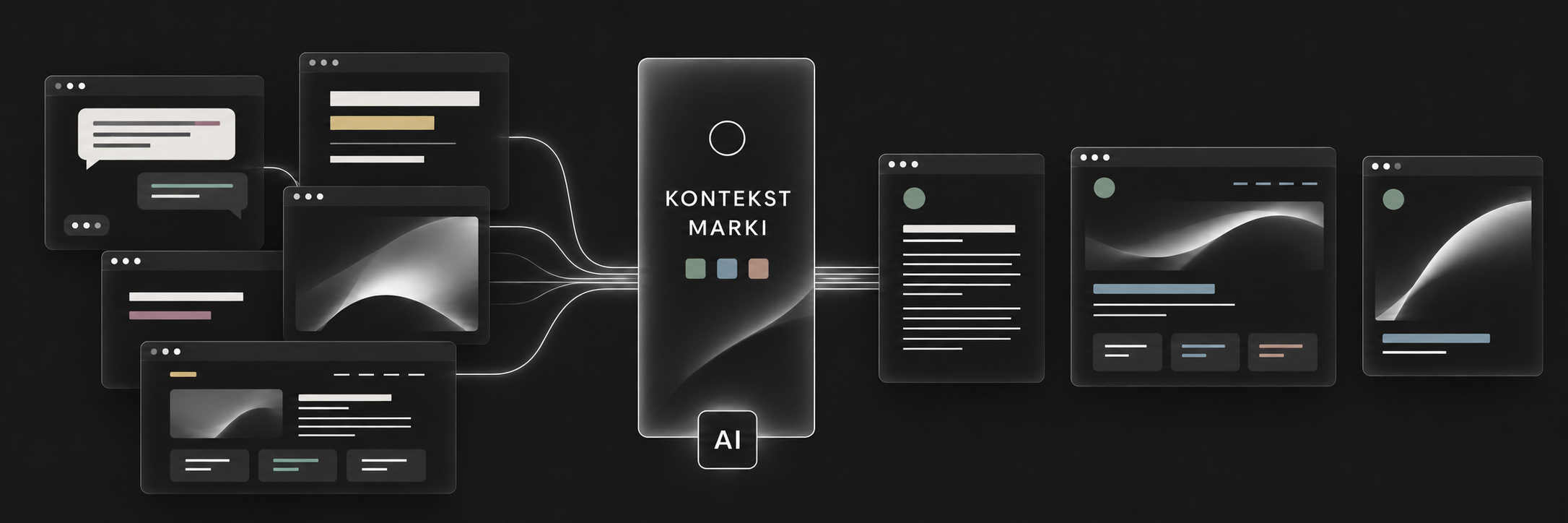
Brand context for AI
“Sound professional, but human” is an instruction any company could give. AI needs much more to distinguish your brand from the rest. Why does it exist? Who is it for? What matters to it? What relationship should it build, and how should people recognise it?
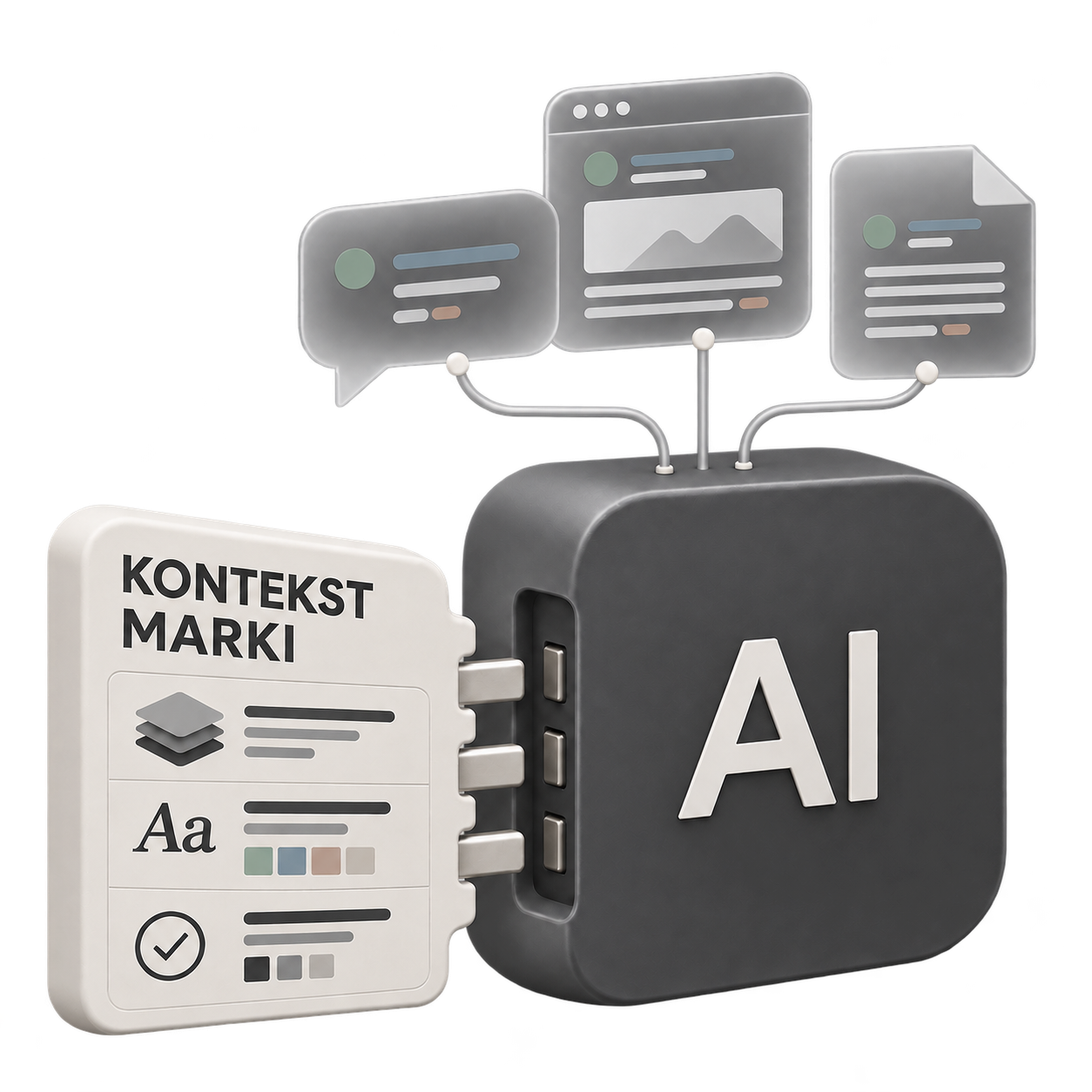
Every brand strategy we develop comes with context for AI. It records positioning, values, archetype, brand voice and communication principles. We translate these into decisions about language, imagery and the customer’s experience. We distinguish facts, ambitions and examples so that a future vision does not turn into an unsupported promise in a sales proposal.
You bring this context into successive conversations and tools. Each new session receives a reference point: decisions we have already made. Owners, employees and contractors can use the same principles when writing proposals, designing a website or preparing sales materials. The results still need reviewing. There is now something to review them against.
Reviewing AI copy and design
It is easy to like your own idea, especially when AI adds three paragraphs of convincing justification. The copy looks considered, so we start treating it as a considered decision. That is a useful moment to stop.
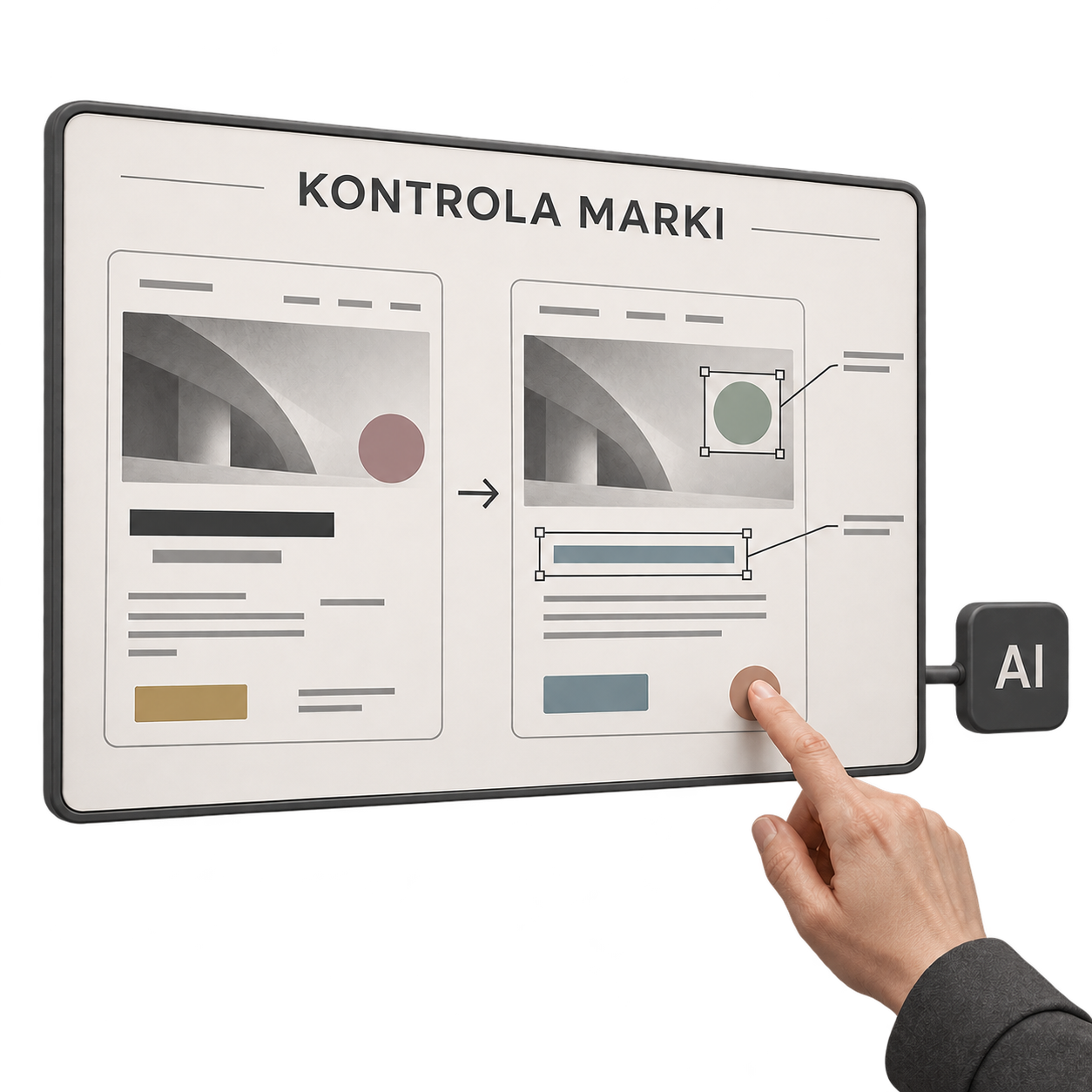
We examine what the material actually communicates: how it positions the business, whom it addresses, what it promises and the character it expresses. Does the image create the right associations? Does the language fit the brand? Does the proposal describe something the customer will value? Is there substance beneath the attractive presentation?
We identify specific inconsistencies and explain their consequences. We show what to keep, change or discard. We revise copy and designs, then turn the findings into instructions for subsequent tasks. The same mistake need not return in every new presentation.
Strategic oversight of your work with AI
A brand rarely changes through one momentous decision. More often, someone softens the language, adds a fashionable effect or decides a proposal should sound more prestigious. Every change has its own justification. A few months later, the original idea is hard to find.
You can create materials independently with AI while drawing on our strategic and stylistic oversight. We establish criteria, discuss the direction before work begins and review successive versions. We identify when a new idea develops the brand and when it starts to dilute it.
We explain the reasoning behind our assessment. Over time, you understand why a particular approach fits and can recognise a mistake before it spreads across a whole set of materials. The purpose of this work is more informed decisions and a consistent brand identity.
AI automation aligned with your brand
Automation can reproduce a poorly considered process very efficiently. If a company does not know what to ask a customer or what to offer them, generating proposals faster only makes the problem bigger.
We begin by establishing how the process should work. What information does the company need? What should follow from it? Where can the system do the work, and where does someone need to make a decision? We then design and implement tools for preparing proposals, organising enquiries and gathering information.
Brand strategy is part of the implementation. The system needs principles for asking questions, communicating value and defining the scope of a promise. To the customer, an automated response is still a response from your company.
AI that knows your brand’s principles
Uploading a logo and adding “use our colours” is not enough. Brand consistency goes much deeper: into how the company thinks, what matters to it and how it talks to people.
We configure AI assistants, instructions and knowledge bases for specific business tasks. We demonstrate the principles through examples: this is a sound answer, this is where the copy becomes generic, and this is where the tool should request information instead of inventing the missing story. We also establish which sources it should use.
We then check its behaviour on real tasks and across successive sessions. We revise instructions where results diverge from the strategy. When the offer or brand direction changes, we update the tool’s knowledge too. This puts strategic decisions into everyday practice.